
 A short drive through the California desert becomes a study in light, architecture, and the particular pleasure of an American V8 at dusk.
Tuscany by Alfa Romeo: Cypress Lanes, Hill Towns, and the Pleasure of Getting Lost
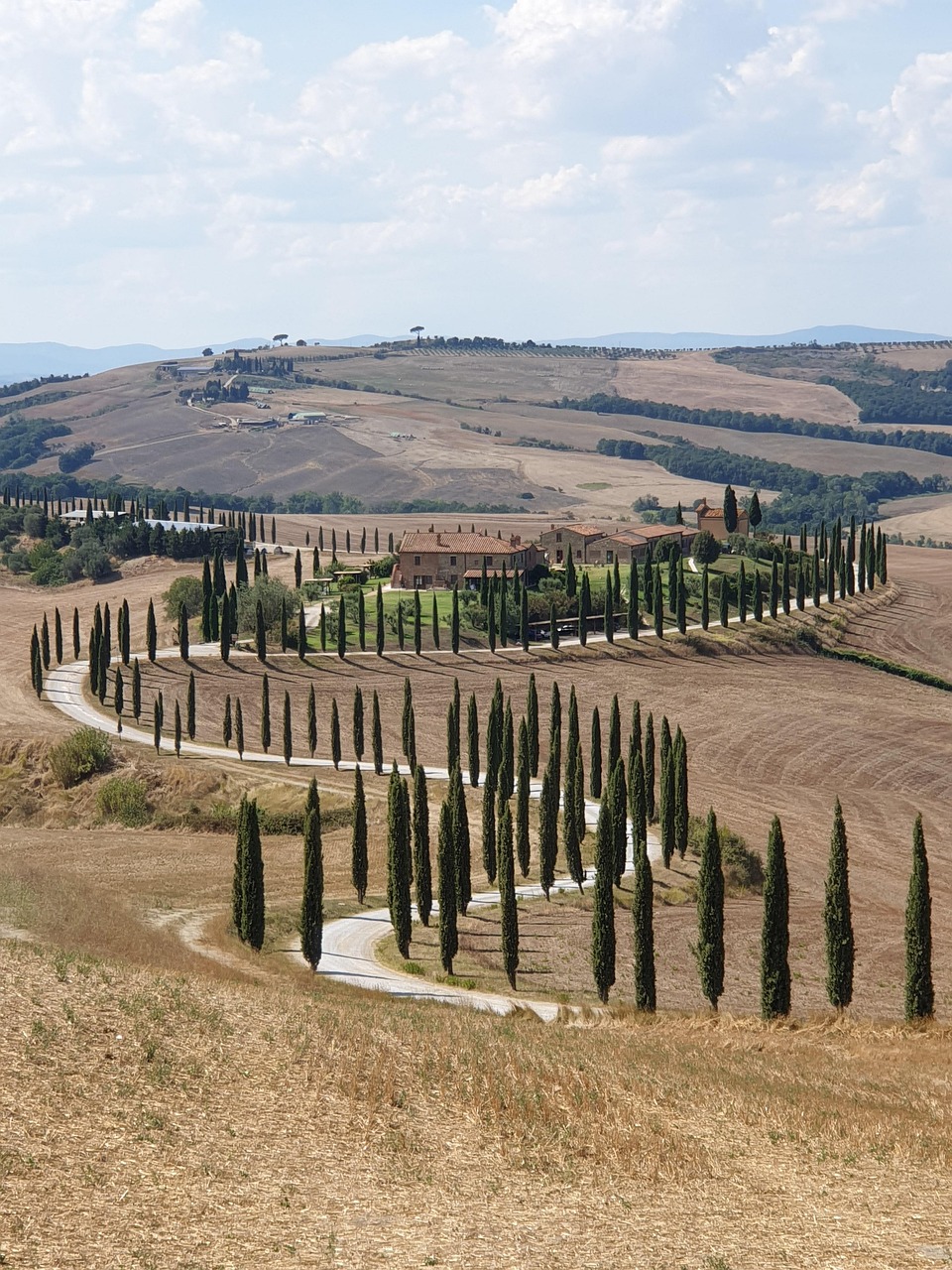
Everyone tells you to drive Tuscany in a convertible, and everyone is right. I did it in a red Alfa Romeo Giulia, top down, with a paper map on the passenger seat because the GPS kept trying to put me on the autostrada and I kept refusing. The whole point of Tuscany is the small roads — the white gravel strade bianche, the lanes lined with cypress trees that look like they were planted by a painter, the roads that only exist because a farmer needed to get his olives to market.
The Alfa was the right car for this. Not because it's fast — it is — but because it's willing. It turns in eagerly, it sounds like it's enjoying itself, and it doesn't mind being driven at thirty kilometers an hour behind a tractor for twenty minutes. That matters here. Tuscany does not reward impatience. It rewards the person who pulls over at an unmarked viewpoint, who follows a sign to a village they've never heard of, who stops for a second coffee because the first one was so good.
The Hill Towns That Deserve More Than a Photo
Everyone knows Siena and San Gimignano, and they're worth it, but go early or go late. The middle of the day belongs to the tour groups. The real pleasure is in the smaller towns — Montalcino, Pienza, Montepulciano, and the ones so small they don't appear on most maps. I spent an afternoon in a village called Montisi, population a few hundred, where I ate a plate of pici cacio e pepe at a table on the street and watched two old men argue about football for an hour. Nobody spoke English. It was perfect.
The drive between Montalcino and Pienza, through the Val d'Orcia, is the one I'd do again tomorrow. The road rolls and dips through wheat fields and vineyards, past farmhouses that cost more than most people's lives, and every few minutes you crest a hill and the whole valley opens up in front of you. I stopped so many times I lost count. The Alfa idled while I took photos I'll never look at again, and that was fine. The photos weren't the point.
Getting Lost on Purpose
The best decision I made was to throw away the itinerary on day three. I'd planned to drive to Florence. Instead I followed a sign for a town called Lucignano and ended up on a road that turned to gravel and then to dirt and then to a farm track, with no idea where I was. I found a winery. I tasted wine I couldn't afford. I bought a bottle anyway. Then I drove back the way I came, because there was no other way, and the sun was setting and the cypress trees were throwing long shadows across the road and I understood, finally, why people write books about this place.
Go in spring or early autumn. Avoid August. Rent the smallest car you can stand — the roads are narrow and the parking is worse. Book your first two nights and leave the rest open. And when the GPS tells you to turn onto the autostrada, ignore it. The long way is the whole point.